Resolve Kubernetes Incidents
AI-powered incident detection and root cause analysis for Kubernetes. Detect errors, analyze code context, and resolve issues before they impact your customers.
Kubernetes incidents are costing your team
Traditional monitoring tools show you what went wrong, but not why. Your engineers waste hours every week correlating logs, reading code, and debugging issues manually.
Hours wasted debugging
DevOps teams spend 10+ hours per week manually scanning logs and debugging production incidents.
Missing critical issues
Infrastructure problems like pod crashes go undetected until they impact customers.
On-call engineer burnout
Engineers pulled from sleep for incidents that could be automatically analyzed and prioritized.
Slow incident resolution
High MTTR (Mean Time To Recovery) due to lack of automated root cause analysis.
AI-powered incident management that understands your code and service dependencies
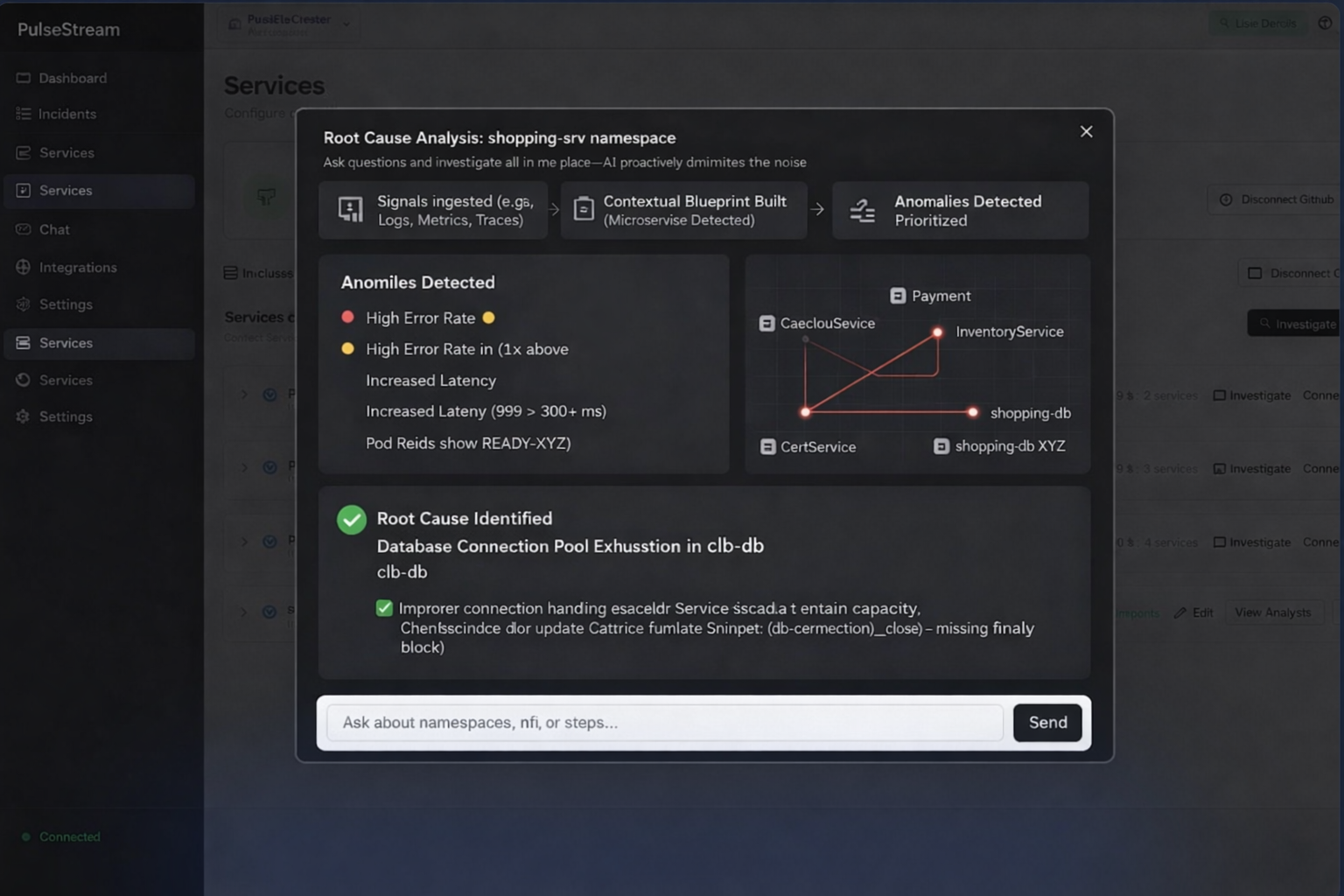
PulseStream automatically detects Kubernetes errors and infrastructure issues, deduplicates related incidents, and analyzes your entire codebase and system context to pinpoint the root cause in minutes.
Chat naturally with PulseStream to investigate any incident without context switching between logs, GitHub, dashboards, and documentation.

When you run production systems at scale, incidents aren't rare, they're inevitable. What frustrated me wasn't the outages themselves, but how inefficient and noisy the debugging process had become.
At Qwilt, as the organization scaled and systems became increasingly complex, finding the true root cause often meant jumping between logs, dashboards, services, and code while the clock was ticking and customers were waiting.
PulseStream exists to change that. By understanding how code and services actually fit together, it helps engineers focus on fixing problems instead of fighting tooling.